Pillow guide
How to Assess a Suite Sleep Pillow for Side-Sleeper Support
A side-sleeper pillow has a deceptively demanding job: fill the space between shoulder and head, keep the neck comfortable, and feel right for hours. The Suite Sleep shredded-latex and Tencel blend pillow brings together resilient fill and a soft, breathable fiber blend. Whether that combination works for you depends less on a label than on the fit between its loft, feel, care needs, and your own sleep setup.
Start with alignment, not marketing language
Side sleeping changes the geometry of the pillow problem. The shoulder sits against the mattress while the head rests above it, leaving a gap that varies from person to person. A pillow that is too low may allow the head to tilt toward the mattress; one that is too high may push it upward. Either mismatch can feel uncomfortable, though a pillow alone cannot diagnose or treat neck pain.
The practical goal is a comfortable, supported position in which the head does not feel forced sharply up or down. There is no single ideal pillow height for every side sleeper. Shoulder width matters, but so does how far the shoulder sinks into the mattress. A plush mattress may let the shoulder settle more deeply than a firm one, changing the amount of pillow height that feels appropriate.
Before comparing materials, take stock of your usual posture. Do you sleep directly on your side, or rotate between your side and back? Do you tuck an arm beneath the pillow? Do you prefer a compact, firm surface or a pillow you can scrunch and reshape? These small habits influence what “support” means in practice. A pillow can have quality materials and still be a poor match if its height or feel conflicts with the way you sleep.
What is inside the Suite Sleep design?
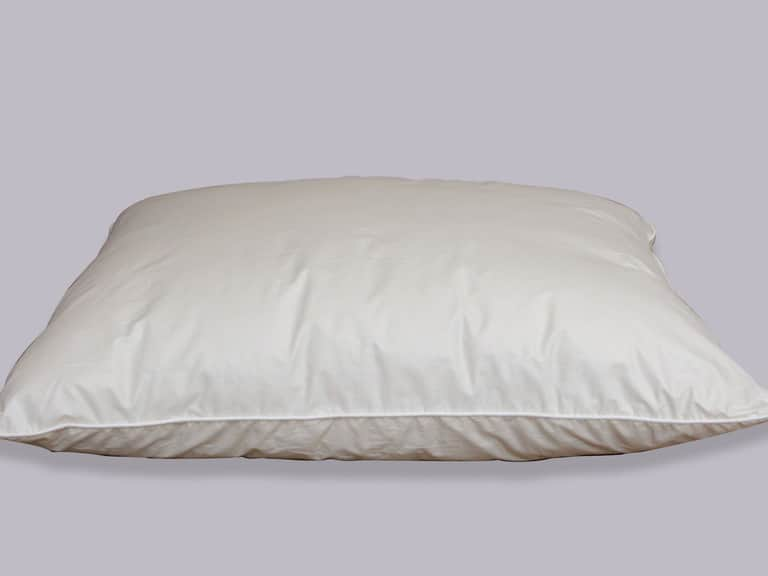
The Suite Sleep Shredded-Latex Tencel blend pillow combines shredded latex with a blend of Tencel fibers and recycled polyester. The supplied product description characterizes the fiber blend as breathable and the latex as adding a firmer feel and support. It is designed especially for side sleepers and is available in multiple sizes; extra fill may also be available to order.
“Shredded latex” describes pieces of latex rather than a single molded block. In a pillow, loose pieces can shift and settle as the sleeper moves, creating a different sensation from a solid latex core. The combination can feel responsive, with some give under pressure, while still offering more substance than a very soft fiber-only pillow. The exact experience depends on the amount and distribution of fill, the cover, and how the pillow is used.
The product information describes the Tencel component as a soft, silky fiber made from eucalyptus-tree pulp and blended with recycled polyester. It is important to separate material description from personal outcome: a breathable cover or blend does not guarantee that every sleeper will feel cool, and “hypoallergenic” is not a promise that a product will prevent every allergic reaction. Individual sensitivities vary, and a pillow’s full construction—not just one named fiber—shapes the experience.
For an independent assessment, treat the listed materials as a starting point. Confirm the current specification, cover construction, size options, and care instructions before making a decision. Product details can change, and a description is not a substitute for trying the pillow if you have the opportunity.
Loft: the first fit test
Loft is the pillow’s height when it is supporting the head. A pillow’s listed dimensions do not tell the whole story: fill can compress, move, or bunch, and a fluffy pillow may have a different effective height once a sleeper settles into it. With a shredded-fill design, the distribution of material can also change as the pillow is squeezed or repositioned.
Assess loft while lying in your normal position, on the mattress you use most often. Allow the pillow to settle rather than judging it immediately after fluffing. Notice whether your head seems level with your spine or noticeably angled. If a partner can observe your posture from behind, that may offer a useful visual check, but comfort and repeated experience remain important. Do not force your neck into a position simply because it appears technically straight.
Shoulder width can help explain why two people have different needs. A broader shoulder may create a larger space to fill, while a narrower frame may need less height. Mattress firmness also matters: if your shoulder sinks substantially into the bed, the gap between head and mattress may shrink. That is why a pillow that works on one mattress may feel different after a move or a mattress replacement.
The supplied description says the Suite Sleep pillow is customizable and notes that extra fill is available. It does not specify that the fill is user-removable, so do not assume you can open it and take material out. If adjustable loft is essential, ask the seller exactly how adjustment works, whether fill can be removed or added at home, and whether doing so affects the pillow’s warranty or construction.
- Too low may feel like: the head sinking toward the mattress, a sense of the neck bending downward, or a need to fold the pillow over.
- Too high may feel like: the head being pushed upward, pressure along the side of the neck, or a persistent urge to move away from the pillow.
- A closer fit may feel like: the head is cushioned without being propped up, and the pillow stays reasonably consistent as you settle.
These are prompts for observation, not medical tests. Persistent, severe, or worsening neck symptoms deserve advice from a qualified health professional rather than repeated pillow experimentation alone.
Firmness and feel are not the same thing
People often use “firm” to mean several things at once: the resistance a pillow offers, how quickly it springs back, how much it compresses, or how stable it feels beneath the head. Shredded latex may provide a springier, more substantial response than loose down-like fill, while the surrounding fibers can contribute softness. The result may feel supportive to one sleeper and too dense or lively to another.
Think about the pillow’s behavior through the night. Does the fill give way enough to cushion the ear and jaw? Does it keep enough structure to avoid a hollow forming beneath the head? Does it hold its shape when you turn, or do you find yourself repeatedly pushing material back into place? A pillow that feels pleasant for a brief test in a showroom may feel different after hours of use, so a trial period and clear return terms can be valuable.
Side sleepers who prefer a more enveloping, compressible pillow may not enjoy a resilient latex feel. Those who dislike frequent fluffing may appreciate a fill that retains structure, though shredded fill is not necessarily immovable. The most useful comparison is not “soft versus supportive,” as if one excludes the other, but whether the pillow balances cushioning and resistance in a way that suits your preferences.
Breathability, temperature, and sensitivity
Temperature comfort is personal and depends on more than pillow fill. Room conditions, bedding layers, sleepwear, body temperature, and the mattress all contribute. A blend described as breathable may be worth considering if you tend to feel warm, but it cannot guarantee a cool night. The pillowcase and protector also matter: a tightly layered setup can change airflow and the feel against the skin.
For people managing allergies, it helps to distinguish between material claims and allergen control. “Hypoallergenic” is a broad marketing term, not a universal medical standard that certifies a product as incapable of triggering symptoms. Latex itself may be unsuitable for people with latex allergy or sensitivity. If you have a known allergy, check the full material specification and seek clinical advice where appropriate; do not rely on a general hypoallergenic label.
Dust mites are influenced by household conditions and bedding hygiene, not simply by whether a pillow uses natural or synthetic materials. A washable pillowcase or protector can provide a practical removable layer, but it does not make the entire pillow washable. If dust-mite allergy is a concern, consult a clinician or reputable allergy-health guidance for a broader management plan, which may include coordinated steps across bedding and the bedroom.
A new material may also have an odor when unpacked. A temporary smell does not establish that a product is harmful, but strong or persistent odors can be unpleasant, particularly for sensitive sleepers. Follow the manufacturer’s ventilation guidance, and stop using the pillow if you experience a concerning reaction. People with asthma or chemical sensitivities may want to ask detailed questions about materials and finishes before purchase.
Care matters as much as comfort
Maintenance is a defining part of pillow ownership. The Suite Sleep care guidance says to use a pillow protector, avoid exposing latex to ultraviolet light, and not wash the latex fill. The cover may be washed if necessary. This is a meaningful distinction: a removable or washable cover can help with routine care, but it does not mean the inner fill should be put in a washing machine.
Before laundering any removable cover, check the current label for water temperature, cycle, drying method, and whether the cover can be removed without disturbing the fill. Do not assume that instructions for another latex pillow apply to this one. If a spill reaches the interior, follow the manufacturer’s directions and allow any cleaned component to dry fully before reuse. Trapped moisture can create an unpleasant environment and may damage materials.
A pillow protector adds a barrier between the pillow and everyday oils, perspiration, and accidental spills. Choose one that fits securely and does not make the pillow feel noticeably warmer or stiffer. Wash the pillowcase and protector on a routine appropriate to your household and their labels. Keep the pillow away from direct sun and high heat, since the care guidance specifically warns that ultraviolet exposure can degrade latex.
Consider your real maintenance habits before choosing. If you need a pillow that can be fully machine washed frequently, a spot-clean-only latex fill may not fit your routine. If you are comfortable laundering a cover and using a protector, that care pattern may be more manageable. Care requirements are not fine print; they determine whether a pillow can remain practical over time.
A simple comparison framework
Rather than relying on a single headline claim, assess the pillow across several dimensions. Give each one a simple rating—poor, acceptable, or strong—after checking the specification and, where possible, trying it in your own bed. The purpose is not to create a universal score. It is to make your priorities visible.
- Alignment: Does the pillow allow a comfortable head-and-neck position on your usual mattress?
- Loft: Is its settled height appropriate for your shoulder width and how deeply you sink into the bed?
- Feel: Do you like the balance between the latex’s resilience and the fiber blend’s softness?
- Stability: Does the fill remain comfortable when you shift position, or does it need frequent reshaping?
- Temperature: Does the complete setup—including case and protector—feel comfortable through the night?
- Care: Are you willing to protect the pillow, wash the cover as directed, and keep the latex away from UV light?
- Material suitability: Have you checked for latex or other known sensitivities rather than relying on a broad label?
- Practical terms: Are size, availability of extra fill, warranty, and trial or return conditions clear?
For a side sleeper, alignment and loft deserve the greatest attention. Breathability and easy care may be important, but neither can compensate for a height that feels wrong. Conversely, a pillow that fits the neck but requires a care routine you cannot maintain may not be the right long-term choice.
Questions worth asking before deciding
Product descriptions are useful, but the details that determine fit are sometimes left unstated. Ask whether the fill is adjustable by the user or only available in different configurations. Clarify whether the cover is removable, what washing instructions apply, and whether any special steps are required after cleaning. Confirm which sizes are available and how the pillow’s dimensions relate to standard pillowcases.
Also ask about latex composition and the possibility of exposure if you have a latex allergy. Request the complete material list, including the cover and any inner casing, rather than assessing the pillow by its headline blend. If you are comparing alternatives, keep the questions consistent so you are comparing like with like.
Finally, review the return or trial policy before purchase. A pillow is a highly personal item, and the decisive test is repeated use in your regular sleep environment. Note how it feels over several nights, whether you wake wanting to reposition it, and whether any discomfort is new or persistent. A brief first impression can be useful, but it should not be the only evidence.
The bottom line
The Suite Sleep shredded-latex and Tencel blend pillow is a candidate for side sleepers who are interested in a resilient fill, a soft fiber blend, and a breathable surface. Its most important test is not whether its materials sound appealing; it is whether its settled loft and feel suit your body, mattress, and sleeping habits. Confirm how customization works, check the full material details, and be realistic about the spot-cleaning and latex-care requirements.
A thoughtful choice begins with your own baseline: shoulder width, mattress firmness, preferred firmness, temperature comfort, and any known sensitivities. Observe the pillow in your normal sleeping position rather than trying to adapt your neck to a product. If the fit feels natural and the maintenance is workable, it may suit your setup. If it does not, another height or fill construction may be a better match. The best pillow is not the one with the most persuasive claim; it is the one that supports a comfortable night without demanding that you ignore what your body is telling you.
A brief note on health
This guide offers general bedding information, not medical advice. Pillow choice may affect comfort, but it cannot diagnose or treat a medical condition. Consult a qualified health professional about persistent pain, allergy symptoms, breathing concerns, or a known material sensitivity.